Thương yêu là phương thuốc diệu kỳ có thể giúp mỗi người chúng ta xoa dịu những nỗi đau của chính mình và mọi người quanh ta.Tủ sách Rộng Mở Tâm Hồn

Có những người không nói ra phù hợp với những gì họ nghĩ và không làm theo như những gì họ nói. Vì thế, họ khiến cho người khác phải nói những lời không nên nói và phải làm những điều không nên làm với họ. (There are people who don't say according to what they thought and don't do according to what they say. Beccause of that, they make others have to say what should not be said and do what should not be done to them.)Rộng Mở Tâm Hồn
Hãy sống tốt bất cứ khi nào có thể, và điều đó ai cũng làm được cả.Đức Đạt-lai Lạt-ma XIV
Thật không dễ dàng để tìm được hạnh phúc trong chính bản thân ta, nhưng truy tìm hạnh phúc ở bất kỳ nơi nào khác lại là điều không thể. (It is not easy to find happiness in ourselves, and it is not possible to find it elsewhere.)Agnes Repplier
Như bông hoa tươi đẹp, có sắc lại thêm hương; cũng vậy, lời khéo nói, có làm, có kết quả.Kinh Pháp cú (Kệ số 52)
Chúng ta có thể sống không có tôn giáo hoặc thiền định, nhưng không thể tồn tại nếu không có tình người.Đức Đạt-lai Lạt-ma XIV
Trong cuộc sống, điều quan trọng không phải bạn đang ở hoàn cảnh nào mà là bạn đang hướng đến mục đích gì. (The great thing in this world is not so much where you stand as in what direction you are moving. )Oliver Wendell Holmes
Những chướng ngại không thể làm cho bạn dừng lại. Nếu gặp phải một bức tường, đừng quay lại và bỏ cuộc, hãy tìm cách trèo lên, vượt qua hoặc đi vòng qua nó. (Obstacles don’t have to stop you. If you run into a wall, don’t turn around and give up. Figure out how to climb it, go through it, or work around it. )Michael Jordon
Như bông hoa tươi đẹp, có sắc nhưng không hương. Cũng vậy, lời khéo nói, không làm, không kết quả.Kinh Pháp cú (Kệ số 51)
Mục đích cuộc đời ta là sống hạnh phúc. (The purpose of our lives is to be happy.)Đức Đạt-lai Lạt-ma XIV
Tôi phản đối bạo lực vì ngay cả khi nó có vẻ như điều tốt đẹp thì đó cũng chỉ là tạm thời, nhưng tội ác nó tạo ra thì tồn tại mãi mãi. (I object to violence because when it appears to do good, the good is only temporary; the evil it does is permanent.)Mahatma Gandhi

Trang chủ »» Danh mục »» SÁCH ANH NGỮ HOẶC SONG NGỮ ANH-VIỆT »» An Open Heart »» Chapter 5: The afflictions »»

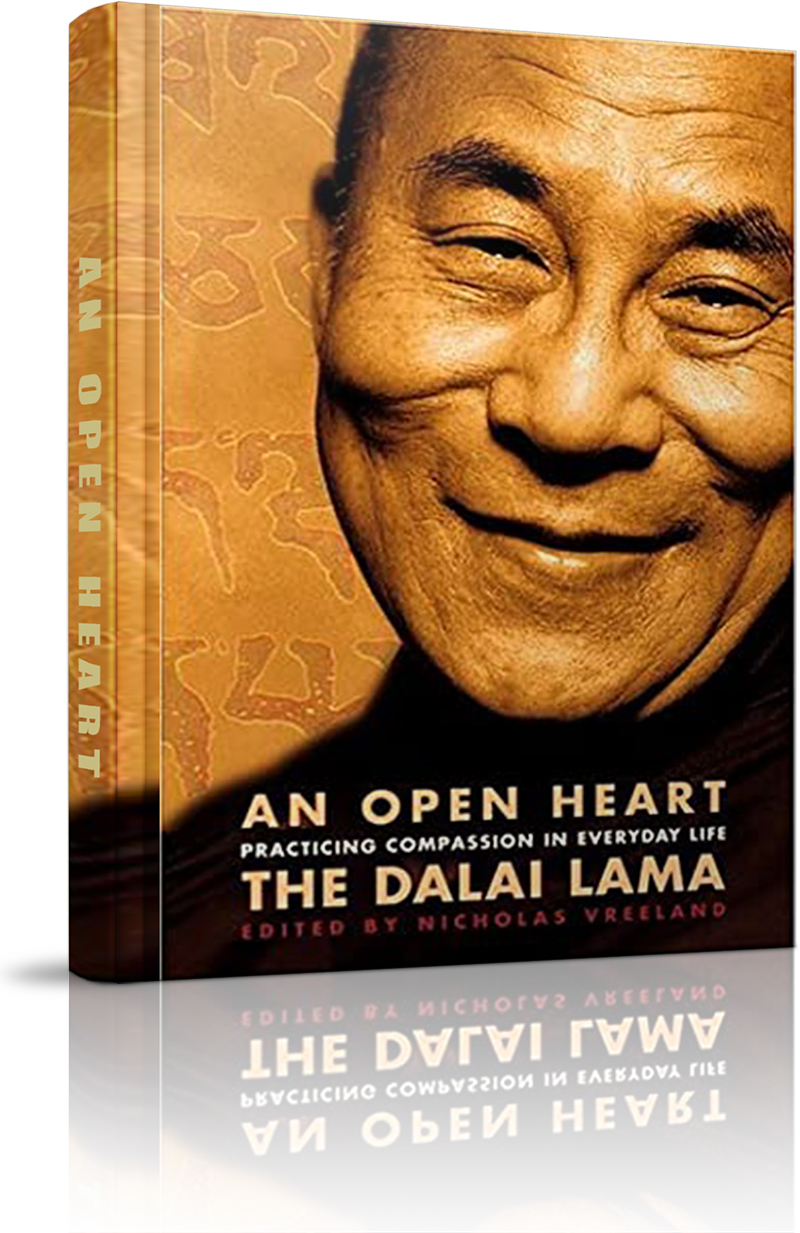
An Open Heart
»» Chapter 5: The afflictions

(Lượt xem: 11.027)
Xem trong Thư phòng    Xem định dạng khác    Xem Mục lục  Vietnamese || Đối chiếu song ngữ



Rộng Mở Tâm Hồn - Chương 5: Phiền não

Font chữ:

We have spoken of the afflictive emotions and the harm they wreak upon our spiritual practice. It is, I must admit, natural for us to experience emotions such as anger and desire. However, this does not mean that we needn’t do anything about them.

I am aware that in Western psychology, expressing feelings and emotions, even anger, is often encouraged. Certainly many people have endured traumatic experiences in their past, and if these emotions are suppressed, they may indeed cause lasting psychological harm. In such cases, as we say in Tibet, “When the conch shell is blocked, the best way to clear it is to blow into it.”

Having said this, I do feel that it is important for spiritual practitioners to adopt a stance against strong emotions such as anger, attachment, and jealousy and devote themselves to developing restraint. Instead of allowing ourselves to indulge in occurrences of strong emotions, we should work at decreasing our propensity toward them. If we ask ourselves whether we are happier when angry or when calm, the answer is evident. As we discussed earlier, the troubled mental state that results from afflictive emotions immediately disturbs our inner equilibrium, causing us to feel unsettled and unhappy. In our quest for happiness, our main aim should be to combat these emotions. We can achieve this only by applying deliberate and sustained effort over a long period of time - we Buddhists would say many successive lifetimes.

As we have seen already, mental afflictions do not disappear of their own accord; they don’t simply vanish over time. They come to an end only as the result of conscious effort to undermine them, diminish their force, and ultimately eliminate them altogether.

If we wish to succeed, we must know how to engage in combat with our afflictive emotions. We begin our practice of the Buddha’s Dharma by reading and listening to experienced teachers. This is how we develop a better picture of our predicament within the vicious circle of life and become familiar with the possible methods of practice to transcend it. Such study leads to what is called “understanding derived through listening.” It is an essential foundation for our spiritual evolution. We must then process the information we have studied to the point of profound conviction. This leads to “understanding derived through contemplation.” Once we have gained true certainty of the subject matter, we meditate on it so that our mind may become completely absorbed by it. This leads to an empirical knowledge called “understanding derived through meditation.”

These three levels of understanding are essential in making true changes in our lives. With greater comprehension derived through study, our conviction becomes more profound, engendering a more powerful realization in meditation. If we lack understanding derived through study and contemplation, even if we meditate very intensely, we have difficulty becoming familiar with the subject we are meditating on, be it the devious nature of our afflictions or the subtle character of our emptiness. This would be similar to being forced to meet someone whom we don’t wish to meet. It is therefore important to implement these three stages of practice in a consecutive manner.

Our environment also has a great influence on us. We need a quiet environment in order to undertake our practice. Most important, we need solitude. By this I mean a mental state free of distractions, not simply time spent alone in a quiet place.

OUR MOST DESTRUCTIVE ENEMY

Our practice of the Dharma should be a continual effort to attain a state beyond suffering. It should not simply be a moral activity whereby we avoid negative ways and engage in positive ones. In our practice of the Dharma, we seek to transcend the situation in which we all find ourselves: victims of our own mental afflictions, the enemies of our peace and serenity. These afflictions - such as attachment, hatred, pride, greed, and so forth - are mental states that cause us to behave in ways that bring about all our unhappiness and suffering. While working to achieve inner peace and happiness, it is helpful to think of them as our inner demons, for like demons, they can haunt us, causing nothing but misery. The state beyond such negative emotions and thoughts, beyond all sorrow, is called nirvana.

Initially, it is impossible to combat these powerful negative forces directly. We must approach them gradually. We first apply discipline; we refrain from becoming overwhelmed by these emotions and thoughts. We do so by adopting an ethically disciplined way of life. For a Buddhist, this means that we refrain from the ten nonvirtuous actions. These actions, which we engage in physically by killing or stealing, verbally by lying or gossiping, and mentally by coveting, are all expressions of deeper mental afflictions such as anger, hatred, and attachment.

When we think along these lines, we come to realize that extreme emotions such as attachment - and particularly anger and hatred - are very destructive when they arise in us and that they are also very destructive when they arise in others! One could almost say that these emotions are the real destructive forces of the universe. We might go further and say that most of the problems and suffering we experience, which are essentially of our own making, are ultimately created by these negative emotions. One could say that all suffering is in fact the result or fruit of negative emotions such as attachment, greed, jealousy, pride, anger, and hatred.

Although at first we are not able to root out these negative emotions directly, at least we are not acting in accordance with them. From here we move our meditative efforts to directly counter our afflictions of the mind and to deepen our compassion. For the final stage of our journey we need to uproot our afflictions altogether. This necessitates a realization of emptiness.

    « Xem chương trước       « Sách này có 19 chương »       » Xem chương tiếp theo »
» Tải file Word về máy » - In chương sách này


_______________

TỪ ĐIỂN HỮU ÍCH CHO NGƯỜI HỌC TIẾNG ANH

DO NXB LIÊN PHẬT HỘI PHÁT HÀNH



BẢN BÌA CỨNG (HARDCOVER)
1200 trang - 54.99 USD


BẢN BÌA THƯỜNG (PAPERBACK)
1200 trang - 45.99 USD


BẢN BÌA CỨNG (HARDCOVER)
728 trang - 29.99 USD


BẢN BÌA THƯỜNG (PAPERBACK)
728 trang - 22.99 USD

Mua sách qua Amazon sẽ được gửi đến tận nhà - trên toàn nước Mỹ, Canada, Âu châu và Úc châu.

XEM TRANG GIỚI THIỆU.

Tiếp tục nghe? 🎧

Bạn có muốn nghe tiếp từ phân đoạn đã dừng không?


Quý vị đang truy cập từ IP 216.73.216.19 và chưa ghi danh hoặc đăng nhập trên máy tính này. Nếu là thành viên, quý vị chỉ cần đăng nhập một lần duy nhất trên thiết bị truy cập, bằng email và mật khẩu đã chọn.
Chúng tôi khuyến khích việc ghi danh thành viên ,để thuận tiện trong việc chia sẻ thông tin, chia sẻ kinh nghiệm sống giữa các thành viên, đồng thời quý vị cũng sẽ nhận được sự hỗ trợ kỹ thuật từ Ban Quản Trị trong quá trình sử dụng website này.
Việc ghi danh là hoàn toàn miễn phí và tự nguyện.

Ghi danh hoặc đăng nhập

Thành viên đang online:
Rộng Mở Tâm Hồn Viên Hiếu Thành Rộng Mở Tâm Hồn Huệ Lộc 1959 Rộng Mở Tâm Hồn Bữu Phước Rộng Mở Tâm Hồn Chúc Huy Rộng Mở Tâm Hồn Minh Pháp Tự Rộng Mở Tâm Hồn minh hung thich Rộng Mở Tâm Hồn Diệu Âm Phúc Thành Rộng Mở Tâm Hồn Phan Huy Triều Rộng Mở Tâm Hồn Phạm Thiên Rộng Mở Tâm Hồn Trương Quang Quý Rộng Mở Tâm Hồn Johny Rộng Mở Tâm Hồn Dinhvinh1964 Rộng Mở Tâm Hồn Pascal Bui Rộng Mở Tâm Hồn Vạn Phúc Rộng Mở Tâm Hồn Giác Quý Rộng Mở Tâm Hồn Trần Thị Huyền Rộng Mở Tâm Hồn Chanhniem Forever Rộng Mở Tâm Hồn NGUYỄN TRỌNG TÀI Rộng Mở Tâm Hồn KỲ Rộng Mở Tâm Hồn Dương Ngọc Cường Rộng Mở Tâm Hồn Mr. Device Rộng Mở Tâm Hồn Tri Huynh Rộng Mở Tâm Hồn Thích Nguyên Mạnh Rộng Mở Tâm Hồn Thích Quảng Ba Rộng Mở Tâm Hồn T TH Rộng Mở Tâm Hồn Tam Thien Tam Rộng Mở Tâm Hồn Nguyễn Sĩ Long Rộng Mở Tâm Hồn caokiem Rộng Mở Tâm Hồn hoangquycong Rộng Mở Tâm Hồn Lãn Tử Rộng Mở Tâm Hồn Ton That Nguyen Rộng Mở Tâm Hồn ngtieudao Rộng Mở Tâm Hồn Lê Quốc Việt Rộng Mở Tâm Hồn Du Miên Rộng Mở Tâm Hồn Quang-Tu Vu Rộng Mở Tâm Hồn phamthanh210 Rộng Mở Tâm Hồn An Khang 63 Rộng Mở Tâm Hồn zeus7777 Rộng Mở Tâm Hồn Trương Ngọc Trân Rộng Mở Tâm Hồn Diệu Tiến ... ...

... ...