Có hai cách để lan truyền ánh sáng. Bạn có thể tự mình là ngọn nến tỏa sáng, hoặc là tấm gương phản chiếu ánh sáng đó.
(There are two ways of spreading light: to be the candle or the mirror that reflects it.)Edith Wharton
Ai sống quán bất tịnh, khéo hộ trì các căn, ăn uống có tiết độ, có lòng tin, tinh cần, ma không uy hiếp được, như núi đá, trước gió.Kinh Pháp cú (Kệ số 8)
Để chế ngự bản thân, ta sử dụng khối óc; để chế ngự người khác, hãy sử dụng trái tim.
(To handle yourself, use your head; to handle others, use your heart. )Donald A. Laird
Giữ tâm thanh tịnh, ý chí vững bền thì có thể hiểu thấu lẽ đạo, như lau chùi tấm gương sạch hết dơ bẩn, tự nhiên được sáng trong.Kinh Bốn mươi hai chương
Cuộc sống ở thế giới này trở thành nguy hiểm không phải vì những kẻ xấu ác, mà bởi những con người vô cảm không làm bất cứ điều gì trước cái ác.
(The world is a dangerous place to live; not because of the people who are evil, but because of the people who don't do anything about it.)Albert Einstein
Hãy sống tốt bất cứ khi nào có thể, và điều đó ai cũng làm được cả.Đức Đạt-lai Lạt-ma XIV
Đừng chờ đợi những hoàn cảnh thật tốt đẹp để làm điều tốt đẹp; hãy nỗ lực ngay trong những tình huống thông thường.
(Do not wait for extraordinary circumstances to do good action; try to use ordinary situations. )Jean Paul
Hãy tự mình làm những điều mình khuyên dạy người khác.
Kinh Pháp cú
Mỗi cơn giận luôn có một nguyên nhân, nhưng rất hiếm khi đó là nguyên nhân chính đáng.
(Anger is never without a reason, but seldom with a good one.)Benjamin Franklin
Con người chỉ mất ba năm để biết nói nhưng phải mất sáu mươi năm hoặc nhiều hơn để biết im lặng.Rộng Mở Tâm Hồn
Cỏ làm hại ruộng vườn, tham làm hại người đời. Bố thí người ly tham, do vậy được quả lớn.Kinh Pháp Cú (Kệ số 356)
Đang nghe bài: David Livingstone ? Medical Missionary
Trang chủ »»Danh mục »»Trang luyện nghe tiếng Anh trực tuyến »»Đang nghe bài: David Livingstone ? Medical Missionary »»
«« »» Đang nghe bài: David Livingstone ? Medical Missionary
You are listening to the article: David Livingstone ? Medical Missionary Listen and check your understanding by viewing the text.
» VIEW TEXT / HIDE TEXT « » VIEW TEXT / HIDE TEXT «
During the reign of Queen Victoria (18371901), British people traveled around the whole world. They charted the seas, mapped out distant countries and studied plants, animals and people. They also claimed many lands for England. This kind of international travel was made easier by improved transportation and communication. New inventions such as steamships, trains, telegraphs and telephones made long distances seem smaller. Of course, people had different reasons for going to distant lands. Some were businessmen who saw economic opportunities overseas. Soldiers wanted fame and a chance to enlarge the British Empire. Biggame hunters wanted to be the first to shoot strange animals and bring back trophies to England. Scientists intended to study unknown animals and plants. Missionaries planned to be the first to introduce Christianity to faraway people. In 1836 a young Scotsman called David Livingstone began to study medicine in Glasgow. Livingstone intended to become a medical missionary. This means that he would be a doctor, as well as a preacher and teacher. Livingstone (18131873) came from a poor family. From an early age, he had worked 14 hours a day in a clothing factory for very little pay. But he was determined to learn. He took his books with him to the factory and read as he worked. Then, after work, he would go to his teacher to learn more. Livingstone's goal was to teach faraway people about Jesus. However, unlike some missionaries, he was also interested in science, geography and exploring. He had planned to go to China in 1839, but because of the Opium Wars no missionaries were being sent there. Instead, he asked to go to South Africa. Europeans had traveled around the coasts of Africa for hundreds of years. But very few white people had traveled inland. A missionary named Robert Moffatt who had begun a mission at Kuruman in the interior inspired Livingstone. Livingstone arrived in Kuruman in 1841. This was the farthest outpost of white settlement, and no one seemed to want to go further inland. Livingstone felt that the missionaries should go to the Africans, rather than waiting for the Africans to come to them. With a fellow missionary he set out. When they came to an African tribe, they would talk to the chief and ask permission to preach to his people. Livingstone would also set up a tent and treat the people who had diseases. After a while, he would move on to the next tribe. Once Livingstone learned the Bantu language he would talk to many Africans. But sometimes he needed interpreters. There were many diseases, including malaria and sleeping sickness. Livingstone suffered much of his life from river fever. He was also so weak that he rode on the back of an ox. Livingstone wanted to stop the slave trade. At this time, the slave trade was the most profitable business in Africa. Livingstone hoped that if other kinds of trade were developed, then slavery could be abolished. In order to open up trade, he wanted to find an easy route into the center of Africa. Livingstone kept going further into the interior. He was probably the first European to cross the Kalahari Desert before reaching Lake Ngami in presentday Botswana. Not long after, he traveled further inland. He explored the sources of the Zambesi and Kasai rivers and eventually reached the west coast of Africa at Luanda, Angola. Livingstone was being criticized for neglecting missionary work in order to explore. Livingstone replied that he was opening up the continent for missionaries. Meanwhile, he was becoming famous as a great explorer. The British government commissioned him to explore the Zambesi River. They hoped that ships could sail up the river into the interior. Unfortunately, the Zambesi had too many rapids. However, Livingstone did find a route up the Shire River to Lake Nyassa. He continued to struggle against the slave trade, which was now being taken over by Arabs. Livingstone died in Africa in 1873. He was the first white man to explore Botswana, Zimbabwe, Zambia, Malawi and surrounding areas. He was not only a great explorer, but also a fine doctor and a good missionary. Nowadays, the countries that Livingstone visited are nearly all Christianjust as he hoped they would be.
Chú ý: Việc đăng nhập thường chỉ thực hiện một lần...
Quý vị đang truy cập từ IP 216.73.216.110 và chưa ghi danh hoặc đăng nhập trên máy tính này. Nếu là thành viên, quý vị chỉ cần đăng nhập một lần duy nhất trên thiết bị truy cập, bằng email và mật khẩu đã chọn.
Chúng tôi khuyến khích việc ghi danh thành viên ,để thuận tiện trong việc chia sẻ thông tin, chia sẻ kinh nghiệm sống giữa các thành viên, đồng thời quý vị cũng sẽ nhận được sự hỗ trợ kỹ thuật từ Ban Quản Trị trong quá trình sử dụng website này. Việc ghi danh là hoàn toàn miễn phí và tự nguyện.
Ghi danh hoặc đăng nhập
Thành viên đang online: Viên Hiếu Thành Huệ Lộc 1959 Bữu Phước Chúc Huy Minh Pháp Tự minh hung thich Diệu Âm Phúc Thành Phan Huy Triều Phạm Thiên Trương Quang Quý Johny Dinhvinh1964 Pascal Bui Vạn Phúc Giác Quý Trần Thị Huyền Chanhniem Forever NGUYỄN TRỌNG TÀI KỲ Dương Ngọc Cường Mr. Device Tri Huynh Thích Nguyên Mạnh Thích Quảng Ba T TH Tam Thien Tam Nguyễn Sĩ Long caokiem hoangquycong Lãn Tử Ton That Nguyen ngtieudao Lê Quốc Việt Du Miên Quang-Tu Vu phamthanh210 An Khang 63 zeus7777 Trương Ngọc Trân Diệu Tiến ... ...
Có hai cách để lan truyền ánh sáng. Bạn có thể tự mình là ngọn nến tỏa sáng, hoặc là tấm gương phản chiếu ánh sáng đó. (There are two ways of spreading light: to be the candle or the mirror that reflects it.)Edith Wharton


 Viên Hiếu Thành
 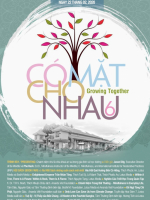 Giữa dòng đời hãy Có Mặt Cho Nhau
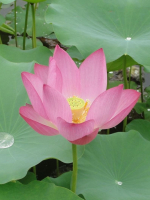 Ưng vô sở trụ nhi sanh kỳ tâm...
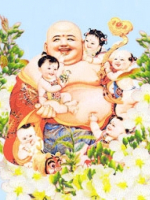 Đêm Đông Nhớ Ngày Xuân
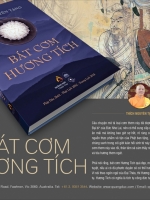 Đọc "Bát Cơm Hương Tích” của TT Thích Nguyên Tạng
 Hạnh kiên nhẫn
 Thằng Khờ
 Tính tự phụ và tâm so sánh
 Mẹ mênh mông, cha vời vợi

 Trang chủ